tag—Microsoft
 Hackers leverage new Microsoft SharePoint exploit in attacks
Hackers have already begun using a proof-of-concept (PoC) exploit for a critical Microsoft SharePoint vulnerability, published by cybersecurity company Rapid7 on Tuesday.
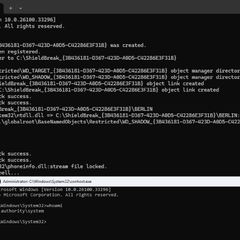 ShieldBreak Zero-Day PoC Claims Microsoft Defender Patch Bypass With SYSTEM Access
The security researcher going by the name Chaotic Eclipse (aka INFINITE NIGHTMARE, MSNightmare, and Nightmare-Eclipse) has released a proof-of-concept (PoC) for a new Microsoft zero-day called ShieldBreak. The vulnerability, rooted in Microsoft Defender for Windows, demonstrates a patch bypass for CVE-2026-50656 (CVSS score: 7.8), otherwise known as RoguePlanet. RoguePlanet has been described
 Microsoft Patches 398 Flaws Including a Windows Driver Zero-Day Under Active Attack
Microsoft released its monthly security updates on Tuesday, and one of the flaws it closed is already being used in attacks. The bug sits in a core Windows kernel driver that handles network socket operations. An attacker with code already running on a machine can use it to escalate to SYSTEM. That patch goes out first. The flaw is tracked as CVE-2026-68820 (CVSS score: 7.0) and is the only
 Researchers Disclose AI-Assisted SharePoint Exploit Chain Reaching Unauthenticated RCE
Security researchers found a way to enter Microsoft SharePoint servers as any user, including an administrator, with no valid account. A significant part of the work that found it was done through an AI agent. The flaw, tracked as CVE-2026-55040 (CVSS 9.1), affects SharePoint Server Subscription Edition, SharePoint Server 2019, and SharePoint Server 2016. Microsoft's
 DeadLock Ransomware Uses Polygon Smart Contracts to Make Extortion Infra Harder to Disrupt
The ransomware group known as DeadLock has been observed using decentralized infrastructure to facilitate victim communications and data leak operations in a bid to improve operational resilience. "Its recovery ecosystem combines the Session messaging network with blockchain-backed services that store and deliver resources used throughout the extortion process," the Microsoft Threat
 CISA: Microsoft SharePoint flaw now exploited in ransomware attacks
CISA confirmed today that ransomware gangs have begun abusing a high-severity Microsoft SharePoint remote code execution vulnerability, which has been flagged as actively exploited since early July.
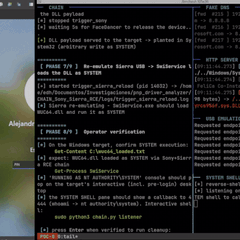 Researchers Turn USB Auto-Install Into a Full SYSTEM Takeover on Windows 11
Windows Plug and Play can be abused to fetch signed vendor software for an emulated USB device and execute privileged installation components that researchers chained to SYSTEM access on a fully updated Windows 11 machine. The same PnP path can be triggered over Remote Desktop without physical hardware when supported Plug and Play or low-level USB redirection is enabled; Microsoft says that
 China-Linked Hackers Deploy New StormEncryptor Ransomware, Likely via N-central Flaw
Microsoft has disclosed that Storm-1175, a financially motivated threat actor linked to China, has deployed a previously undocumented ransomware strain called StormEncryptor. The use of StormEncryptor marks a shift from the adversary's previous use of Medusa ransomware, the Microsoft Threat Intelligence Team said. "StormEncryptor is written in C++ and appends the file name extension .encrypted
 Solidity Pro VS Code Extensions Steal Crypto Wallets, API Keys, and Credentials
Cybersecurity researchers have flagged a malicious Microsoft Visual Studio Code (VS Code) extension named Solidity Pro ("solidity-pro") that has been observed delivering a browser wallet and credential stealer. The names of the extensions are below - helper-beeps.solidity-pro web3devtoolsx.solidity-pro Although neither of the extensions is now available on Open VSX, the GitHub repository
 200 accounts compromised in Swiss government’s Microsoft SharePoint breach
Hackers exploited vulnerabilities in Microsoft SharePoint servers belonging to Switzerland’s Federal Office of Information Technology, Systems and Telecommunication (BIT), compromising the login credentials of around 200 accounts. On July 28, BIT’s security specialists noticed unusual activity on the SharePoint servers. Once the intrusion was confirmed, BIT blocked internet access to the platform and closed the vulnerabilities being exploited. Three days later, on July 31, security specialists discovered “that the login credentials for several accounts had
- 1
- 2
- 3
- 4
- 5
- 6
- 136