An ongoing phishing campaign dubbed "GoodGuys" impersonates major brands, including Google, Nvidia, Accenture, and SpaceX, to steal corporate Google and Okta credentials using fake invitations to paid expert interviews and webinars.
The attacks offer recipients up to $600 for a 45-minute interview in an attempt to get them to sign in with their work accounts to participate.
The campaign was discovered by cybersecurity firm Push Security, which has tracked it since October 13 and found that they impersonate eight companies: Accenture, American Express, Coca-Cola, Culver's, Google Cloud, Nvidia, SpaceX, and Spotify.

The threat actors abuse legitimate email and event platforms, including HireVue, SendGrid, Mandrill, and Cvent, to distribute phishing links.
In one attack, a phishing email sent through HireVue invited recipients to attend a Google Cloud webinar about deploying AI applications into production.
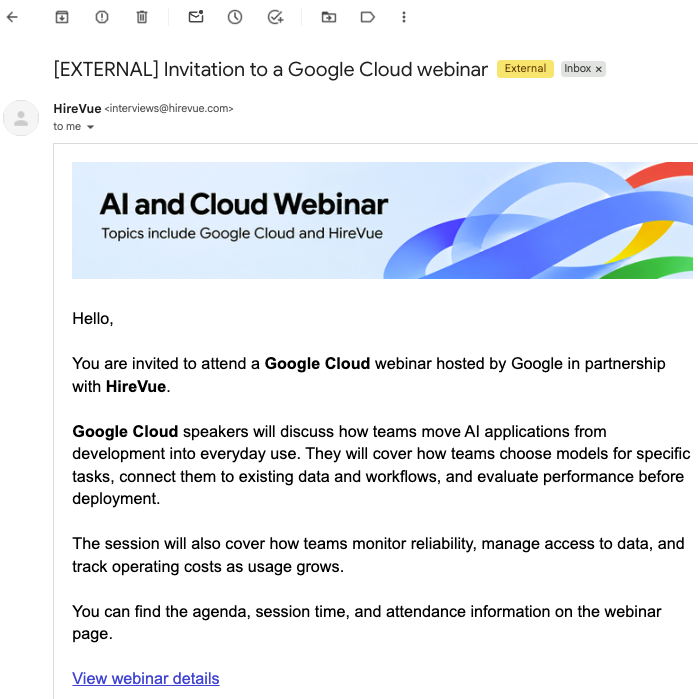
The threat actors use domains themed around interviews, webinars, and research studies, creating brand-specific subdomains to host the phishing pages, such as:
- accenture[.]international-interviews[.]com
- nvidia[.]feedback-study[.]com
- google[.]webinar-cloud[.]com
- spotify[.]interview-experts[.]com
Clicking the phishing links typically takes recipients to a CAPTCHA challenge before displaying a website impersonating the company that supposedly sent the invitation.
Each website features customized branding and lures, with the Nvidia phishing site offering $500 to participate in an AI feedback study and the Accenture site offering $600 for an expert interview.
The sites ultimately prompt visitors to sign in with their Google accounts to validate their invitations, allowing the attackers to steal their credentials. The phishing kit specifically targets corporate accounts and rejects email addresses associated with Gmail, Yahoo, and Outlook.
Unlike adversary-in-the-middle (AiTM) phishing kits that use reverse proxies to relay legitimate login pages, GoodGuys uses fake authentication forms controlled by an attacker-controlled server.
After victims enter their Google credentials, the phishing page can display various multifactor authentication (MFA) challenges, including requests for SMS codes, authenticator codes, and Google sign-in prompts requiring users to select a matching number on their phones.
The kit also includes fake Okta authentication forms and support for Okta Verify push notifications.
Push Security believes the threat actors manually attempt to log in using the stolen credentials, instructing the phishing page to display whatever MFA or security challenges Google or Okta show during authentication.
Similar techniques were used in vishing-based data theft attacks linked to the ShinyHunters extortion gang earlier this year to steal corporate single sign-on (SSO) credentials.
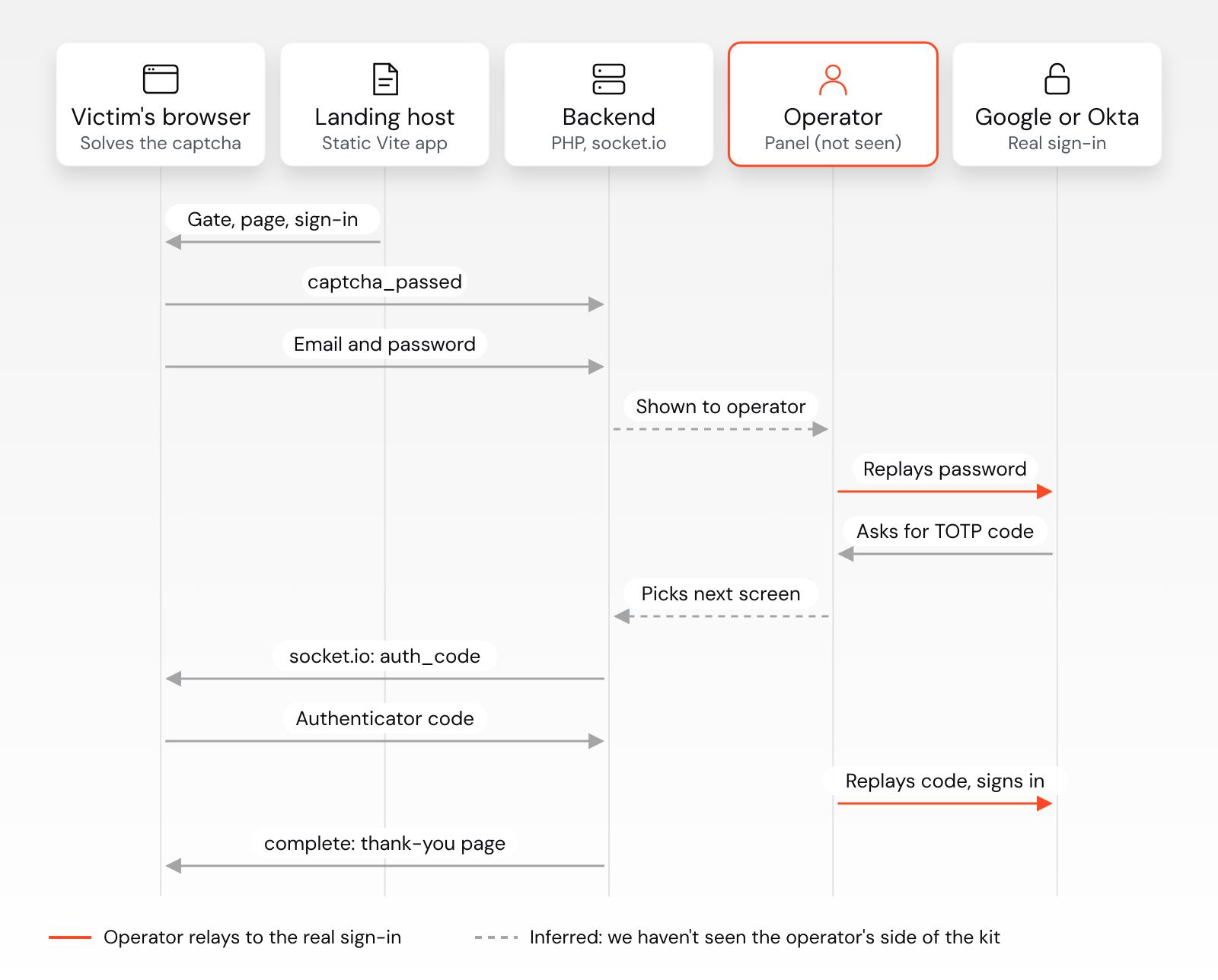
Once the process is completed, the phishing kit redirects victims to another website or displays a message thanking them for their application.
The researchers believe the phishing kit may have been developed using an AI coding assistant, based on hidden accessibility labels found in every analyzed version of the kit.
"The sign-in card in every build carries two hidden labels: "Sign-in simulation" and "GoodGuys sign-in simulation." They sit in accessibility text that only screen readers announce, so a visitor never sees them. We think the label is a leftover from how the kit was first built," explained Push Security.
"Calling the page a sign-in "simulation" for a made-up company is the kind of framing someone would use to get an AI coding assistant past its guardrails when asking it to build a phishing page. The label then stayed in every build we've collected."
The researchers also discovered a potentially related phishing campaign that uses fake Coca-Cola interview invitations and the Evilginx phishing kit to target Google Ads accounts.
While both campaigns used the same abused SendGrid click tracker and identical Coca-Cola branding assets, differences in their code and infrastructure prevented researchers from conclusively linking the attacks to the same threat actor.
Adaptive Security's AI agents analyze email intent, context, and behavior to uncover phishing, business email compromise, and invoice fraud.
See what's getting through with a 14-day read-only scan of Microsoft 365 or Google Workspace, with no MX changes.