- Scope:
- Access Control, Confidentiality
- Impact:
- Bypass Protection Mechanism, Read Application Data
- Notes:
- The most common attack performed with cross-site scripting involves the disclosure of private information stored in user cookies, such as session information. Typically, a malicious user will craft a client-side script, which -- when parsed by a web browser -- performs some activity on behalf of the victim to an attacker-controlled system (such as sending all site cookies to a given E-mail address). This could be especially dangerous to the site if the victim has administrator privileges to manage that site. This script will be loaded and run by each user visiting the web site. Since the site requesting to run the script has access to the cookies in question, the malicious script does also.
- Scope:
- Integrity, Confidentiality, Availability
- Impact:
- Execute Unauthorized Code or Commands
- Notes:
- In some circumstances it may be possible to run arbitrary code on a victim's computer when cross-site scripting is combined with other flaws, for example, "drive-by hacking."
- Scope:
- Confidentiality, Integrity, Availability, Access Control
- Impact:
- Execute Unauthorized Code or Commands, Bypass Protection Mechanism, Read Application Data
- Notes:
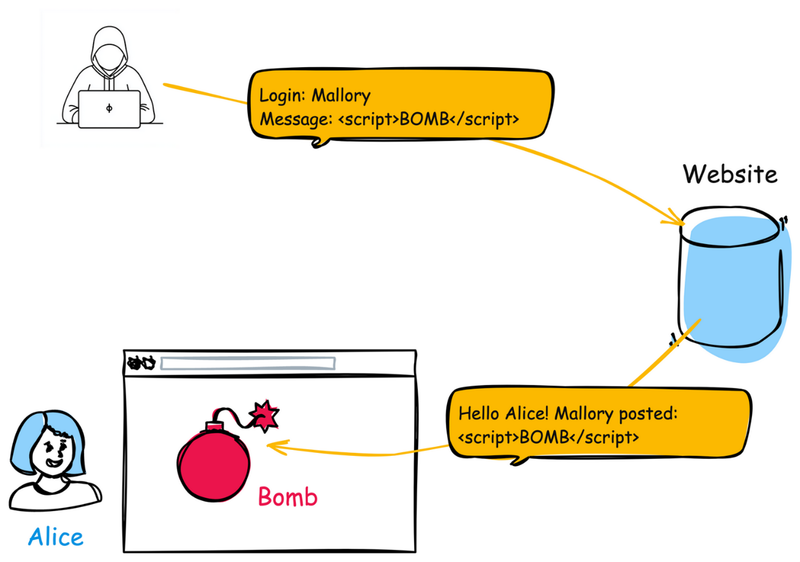
- The consequence of an XSS attack is the same regardless of whether it is stored or reflected. The difference is in how the payload arrives at the server. XSS can cause a variety of problems for the end user that range in severity from an annoyance to complete account compromise. Some cross-site scripting vulnerabilities can be exploited to manipulate or steal cookies, create requests that can be mistaken for those of a valid user, compromise confidential information, or execute malicious code on the end user systems for a variety of nefarious purposes. Other damaging attacks include the disclosure of end user files, installation of Trojan horse programs, redirecting the user to some other page or site, running "Active X" controls (under Microsoft Internet Explorer) from sites that a user perceives as trustworthy, and modifying presentation of content.