- Scope:
- Confidentiality, Integrity, Availability, Non-Repudiation, Access Control
- Impact:
- Gain Privileges or Assume Identity, Bypass Protection Mechanism, Read Application Data, Modify Application Data, DoS: Crash, Exit, or Restart
- Notes:
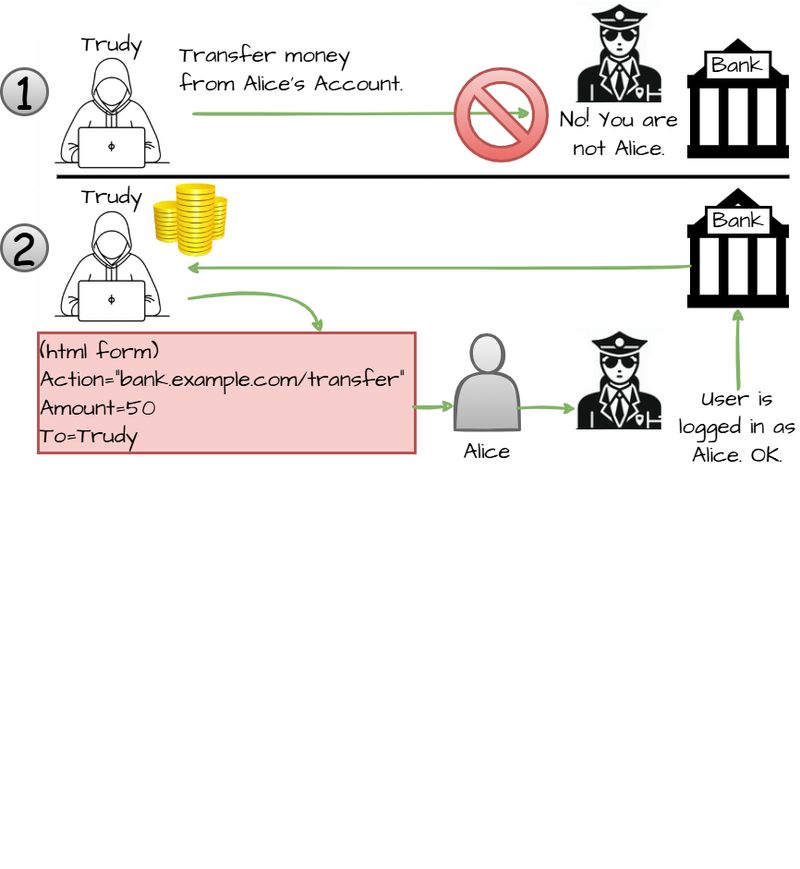
- The consequences will vary depending on the nature of the functionality that is vulnerable to CSRF. An attacker could trick a client into making an unintentional request to the web server via a URL, image load, XMLHttpRequest, etc., which would then be treated as an authentic request from the client - effectively performing any operations as the victim, leading to an exposure of data, unintended code execution, etc. If the victim is an administrator or privileged user, the consequences may include obtaining complete control over the web application - deleting or stealing data, uninstalling the product, or using it to launch other attacks against all of the product's users. Because the attacker has the identity of the victim, the scope of CSRF is limited only by the victim's privileges.