
A critical finding can move through several security tools and still leave the organization exposed.
The vulnerability has a severity score, and a ticket has reached the queue. Progress then depends on information the finding may lack: who owns the system, whether attackers can reach it, what protection exists, and how a change could affect the business.
Each missing detail creates another investigation, another handoff, and another delay.
An exposure management platform should connect discovery with a clear priority, an appropriate response, and evidence that protection has improved.
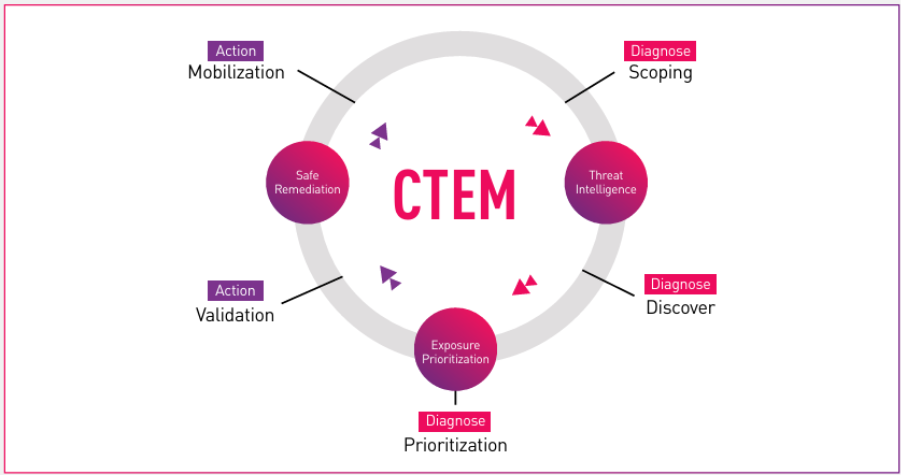
Continuous threat exposure management (CTEM) connects this work through scoping, discovery, prioritization, validation, and mobilization. These five tests establish whether a platform can support that process across infrastructure, identities, sensitive data, and external threats.
Security teams often have several records of the same asset. A cloud platform identifies an instance, an endpoint tool records its hostname, and an inventory lists an owner who has changed roles.
Cyber asset attack surface management (CAASM) connects those records, helping reveal stale information, missing ownership, and protection gaps.
The resulting view needs enough detail to support action: the asset’s owner, business purpose, assessment history, and security coverage. A system with no reported vulnerabilities should be distinguishable from one never assessed.
Disagreements between sources also need to remain visible. If an endpoint tool reports an active server while the inventory marks it retired, source records and update times help teams resolve the conflict.
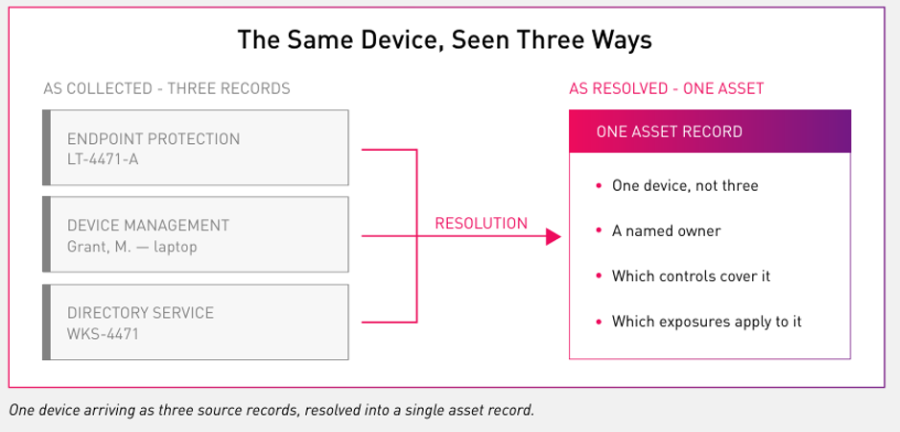 |
| Figure 1. CAASM connects source records with asset ownership, security coverage, and exposure context. |
External discovery adds another perspective. External attack surface management (EASM) helps uncover what assets make accessible from the outside, including shadow IT, forgotten subdomains, and exposed services that internal tools never see.
EASM and CAASM work best together: CAASM maps what you know you own, while EASM validates that picture from the attacker’s point of view and surfaces what’s missing. Every unmanaged asset EASM finds can be fed back into CAASM, closing coverage gaps and giving each asset an owner. EASM also covers brand exposure, extending discovery to phishing sites, fraudulent profiles, and brand impersonation, so the same external view that finds your unknown assets also finds the lookalikes attackers build to target your customers and employees.
Read CAASM Was Never Meant to Stand Alone to see how asset intelligence supports the decisions and actions that follow discovery.
2. Explain Which Exposures Require Action First
Prioritization depends on understanding what an exposure actually puts at risk. A customer-facing application may carry the same severity score as an isolated development system while presenting very different business risk.
Prioritization should connect:
- Reachability and exploitability: Whether attackers have a usable path to exploit the weakness.
- Threat activity: Whether attackers are targeting the vulnerability or technology.
- Business impact: What the system supports and what compromise could affect.
- Existing protection: Whether relevant controls cover the system and are enforced.
Those conditions change. New exploitation activity may accelerate a response, while a disabled protection may invalidate an earlier assessment.
External threats need similarly specific reasoning. A fraudulent support account approaching customers may require rapid disruption; an abandoned company profile may first need ownership review.
See what the 2026 Exposure Gap Report reveals about prioritization and remediation performance.
3. Validate the Exposure and the Proposed Response
A clear priority can still stall when the system owner lacks confidence in the proposed change.
Validation needs to establish what the exposure allows and how the response could affect operations.
Identifying vulnerable software, confirming reachability, and demonstrating exploitability establish different things. A platform should distinguish observed evidence from analysis and untested assumptions. Attack-path relationships also need supporting evidence and clear limitations.
The proposed response requires separate assessment. A patch may depend on application testing and a maintenance window. An intrusion prevention system protection may require observation in Detect mode before enforcement.
Evidence should address the action’s scope, dependencies, false positives, performance impact, and recovery options. Following a proposed change through this assessment reveals what the platform establishes and what teams must investigate themselves.
4. Carry Safe Remediation Through Existing Workflows
Knowing what to fix first is great, but only if the fix happens quickly. The permanent patch often waits on testing, approval, and a maintenance window, and the exposure stays open the whole time. That’s true whether the weakness is on an internet-facing server or a phishing site targeting your customers.
Speed comes from confidence. Teams hesitate when they can’t say what an action will touch. When the platform already knows the asset, its owner, the active threat, and the controls in place, that hesitation disappears. Many Check Point Exposure Management customers remediate safely within one hour, because the context is complete and the safety checks are built in.
To test this, take one real finding and follow it from priority to protection:
- Owner: Is the right person assigned automatically?
- Safety: Is the action validated before it runs, including its impact and a way back?
- Execution: Does it run through the controls you already have, whether a virtual patch, a configuration change, or a takedown?
- Confirmation: Is the result verified, with the permanent fix still tracked?
Interim protection buys time, but it shouldn’t replace the long term fix.
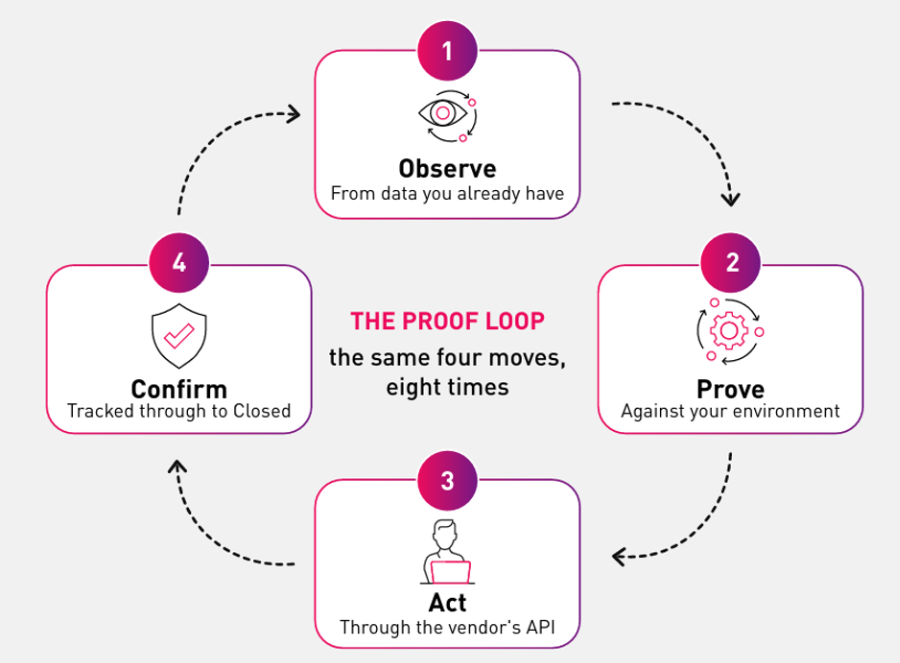 |
| Figure 2. Safe remediation connects observation, validation, action, and confirmation. |
Speed holds up at scale. Between January 1 and October 26, 2026, an airline group completed more than 1,500 takedowns of profiles impersonating its airlines and support teams, combining analyst review with automated remediation.
And when an action fails, the exposure should stay visible with a clear next step.
Read Safe Remediation: Confident Remediation in Production to see how validation, execution, and confirmation work together.
5. Show What Changed and What Remains
A completed action needs evidence of the resulting state.
A patch may miss unavailable systems. A policy update may exclude an intended asset. A takedown request may be accepted before the account disappears.
Verification should establish whether the vulnerability remains, protection is enforced, or malicious content has been removed. Monitoring should identify recurrence.
Reporting must distinguish removed vulnerabilities, interim mitigations, completed takedowns, and accepted risk. Each leaves different responsibilities outstanding.
Mean time to remediate (MTTR) requires agreed starting points, completion criteria, and treatment of temporary protection.
Tracking assignment, approval, execution, and verification separately reveals delays.
Recurring findings, failed actions, and aging mitigations can expose operational problems another scan will not resolve.
Apply the Tests Across Vendors
Platforms approach these requirements from different foundations. The five tests provide a consistent basis for evaluating coverage, evidence, and action.
Check Point Exposure Management combines internal asset intelligence, external discovery, threat intelligence, and brand protection with prioritization, exploitability validation, and safe remediation. It spans infrastructure weaknesses, phishing, and brand impersonation, supporting action through existing controls and takedown workflows.
Bring Intelligence Through to Safe Action
The five tests follow an exposure from discovery to a confirmed response. Each stage should give the next team enough reliable information to act while keeping unresolved work visible.
Check Point Exposure Management carries asset and threat context into responses to vulnerabilities, control gaps, and external threats. Proposed actions are evaluated before enforcement, with approved responses coordinated through supported Check Point and third-party technologies.
That connection helps organizations strengthen protection while accounting for production constraints and building on existing investments. It creates a traceable path from an identified exposure to an evaluated, implemented, and confirmed response.
Book a demo to see how Check Point Exposure Management carries an exposure from discovery through safe remediation and verified protection.