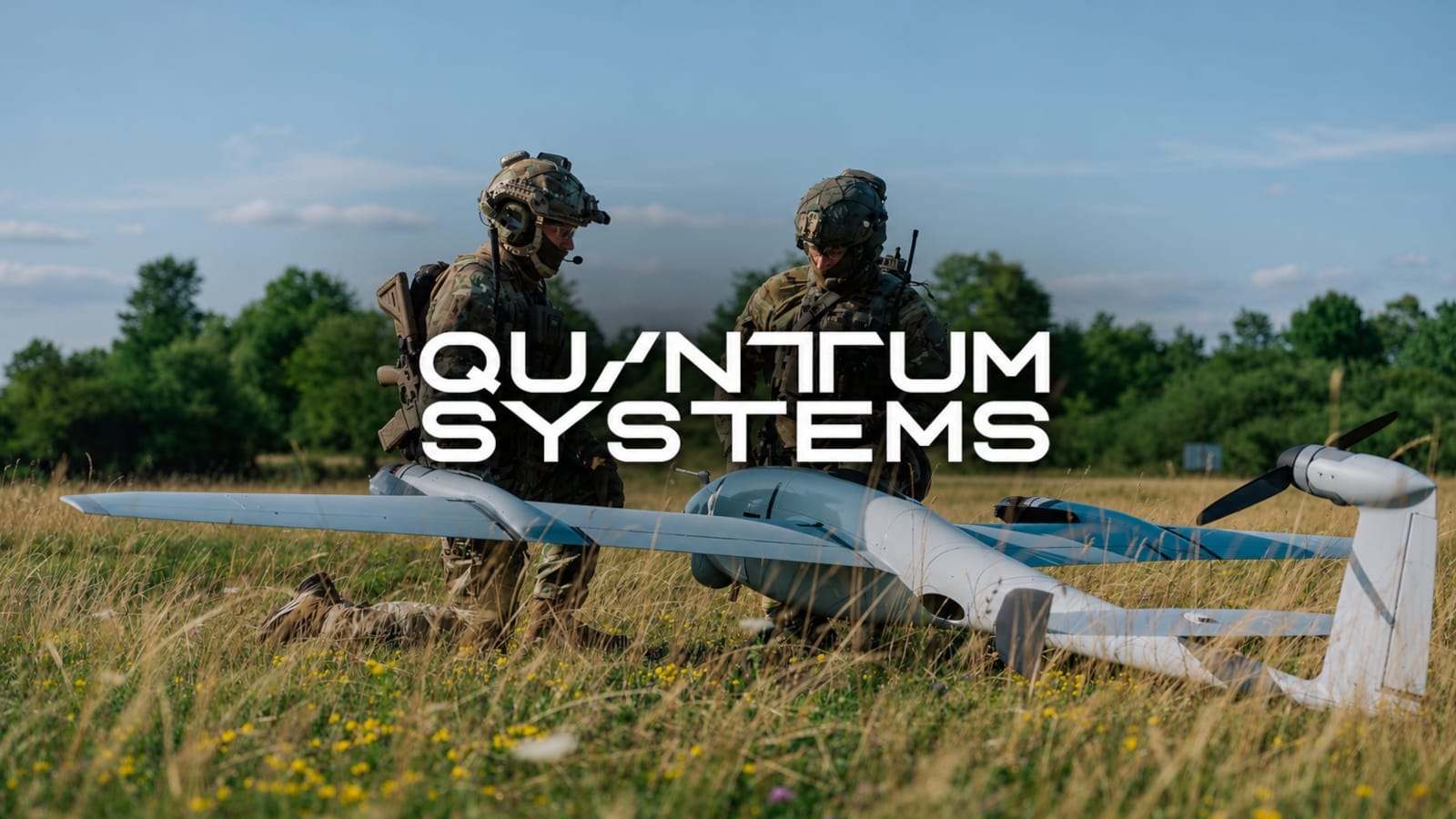
German defense technology company Quantum Systems confirmed that it detected an incident in late October that was part of an active cyberattack by "hostile actors."
The company responded quickly, working with relevant authorities to resolve the issue swiftly and ensure its unmanned systems could safely resume operations.
Quantum Systems is a German defense technology company that builds reconnaissance and interceptor drones, along with other unmanned systems and the software that controls them.
Its drones are in service with Germany’s military, and in October Germany announced funding to build tens of thousands of Quantum Systems interceptor drones in Ukraine for Ukrainian forces.
Quantum Systems believes it was targeted because of its recent announcement of support for Ukraine and says it is working closely with state authorities to investigate the attack.
“The European defense industry has been facing persistent cyberattacks for years,” Quantum Systems stated without making a specific attribution.
“Companies at the forefront of supporting Ukraine are being targeted precisely because our work is critically relevant to customers’ security.”
Update server compromised
According to reports from Der Spiegel and the Financial Times, citing internal sources, the compromise occurred via a malicious QBase update file.
QBase is Quantum Systems’ ground-control and mission-planning software, so the point of the compromise was the vendor’s update distribution server.
Der Spiegel identified the Vector reconnaissance drone, known as Falke in German military service, as one of the aircraft whose missions are planned with QBase.
The German outlet reports that the unscheduled update delivered to customers raised alarms within Quantum Systems, but it is unclear how many actually installed it.
Additional reports claim that the German armed forces grounded Quantum Systems drones as a precaution, excluding the company's systems from a recent military exercise.
The response reportedly involves the military counterintelligence (MAD), the domestic intelligence service (BfV), and the federal cybersecurity agency (BSI).
In July, another drone manufacturer, the Australian CubePilot, which also openly supports Ukraine, was targeted by a DNS hijacking attack that caused severe operational disruption.
DNS hijacking could, among other things, be used to deliver malicious updates to downstream users of CubePilot’s drone systems, though such a level of compromise was never confirmed.
Adaptive Security's AI agents analyze email intent, context, and behavior to uncover phishing, business email compromise, and invoice fraud.
See what's getting through with a 14-day read-only scan of Microsoft 365 or Google Workspace, with no MX changes.