ScyScan - Free Online Security & Network Tools

ScyScan provides a suite of free security tools β€” try our web scanner, virus scanner, link checker, SSL checker, WHOIS lookup, and IP lookup all in one place.

Explore All Tools

Cybersecurity Toolkit

Choose from our range of free online security and network tools to protect your devices, websites, and online presence

Web Scanner

Check websites for vulnerabilities and other security issues, providing real-time results and detailed analysis.

Scan Website / URL

Virus Scanner

Scan files for malware, viruses, trojans, and other threats using multi-engine technology.

Scan Files

Link Checker

Verify URLs for safety, detect phishing attempts, and check if links lead to malicious websites.

Check Links

SSL Checker

Analyze SSL certificates, check expiration dates, and verify proper encryption implementation.

Check SSL

Whois

Get detailed domain registration information including owner details, registration dates, and expiration.

Lookup Domain

IP Lookup

Identify geographic location, ISP information, and other details about any IP address.

Lookup IP

Why Choose ScyScan

ScyScan brings together essential security and network tools in a single, free platform designed for everyday use

πŸ”’

All-in-One Platform

Web scanner, link checker, virus scanner, SSL checker, WHOIS, and IP lookup β€” all available from one place.

πŸ”„

Trusted Reliability

Built on up-to-date threat intelligence and network databases you can count on.

πŸš€

Results in Seconds

Most checks complete within seconds so you get answers fast.

πŸ’°

Completely Free

All our security and network tools are free to use with no hidden costs or fair use restrictions.

🌐

Online Access

No software installation required - access our tools from any browser, anywhere.

πŸ“Š

Clear Reports

Receive straightforward analysis and easy-to-understand reports for every tool.

Built for Everyday Security

ScyScan combines multiple security data sources and network databases into one accessible platform. No complex setup β€” just enter what you need and get clear results.

Multiple Data Sources

Aggregated threat intelligence from trusted security feeds for comprehensive coverage

Network Databases

Access to extensive WHOIS and IP geolocation databases for accurate information

Privacy Focused

We respect your privacy and automatically delete scans and lookups after analysis

Continuously Updated

Data sources are refreshed regularly so you get current information.

How People Use ScyScan Tools

πŸ“§ Check Attachments

Use our virus scanner to check files before opening them

🌐 Audit Your Website

Run a web scan to check your website for known vulnerabilities

πŸ”— Verify Links

Use the link checker to test if a URL is safe before clicking

πŸ” Inspect SSL

Check SSL certificate validity and configuration for any domain

🏒 Research Domains

Look up domain registration details with the WHOIS tool

πŸ“ Trace IPs

Find geographic and network details for any IP address

Start Using ScyScan Tools

All tools are free and ready to use β€” no account or sign-up required

Explore All Tools

cPanel CVE-2026-41940 Under Active Exploitation to Deploy Filemanager Backdoor
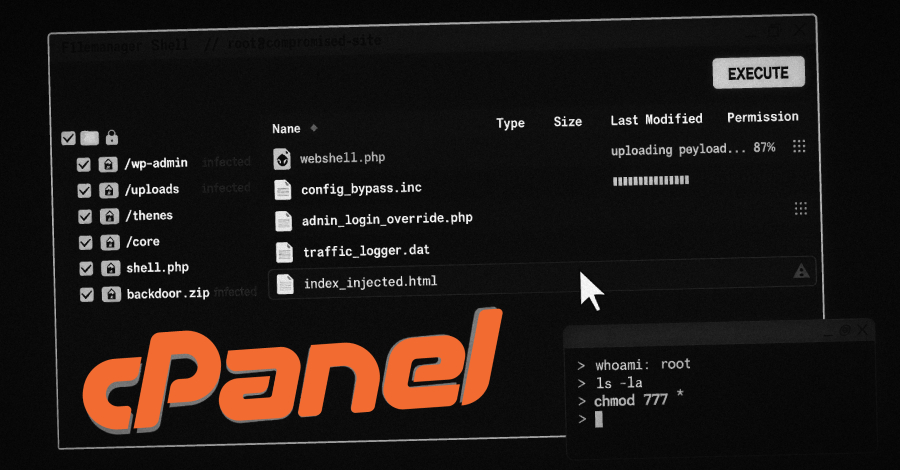
A threat actor named Mr_Rot13 has been attributed to the exploitation of a recently disclosed critical cPanel flaw to deploy a backdoor codenamed Filemanager on compromised environments.

The attack exploits CVE-2026-41940, a vulnerability impacting cPanel and WebHost Manager (WHM) that could result in an authentication bypass and allow remote attackers to gain elevated control of the control panel.

According to a new report from QiAnXin XLab, the security defect has been exploited by a number of threat actors shortly after its public disclosure late last month, resulting in malicious behaviors like cryptocurrency mining, ransomware, botnet propagation, and backdoor implantation.

"Monitoring data shows that more than 2,000 attacker source IPs worldwide are currently involved in automated attacks and cybercrime activities targeting this vulnerability," XLab researchers said. "These IPs are distributed across multiple regions globally, primarily originating from Germany, the United States, Brazil, the Netherlands, and other regions."

Further analysis of the ongoing exploitation activity has uncovered a shell script that uses wget or curl to download a Go-based infector from a remote server ("cp.dene.[de[.]com") that's designed to implant a compromised cPanel system with an SSH public key for persistent access, along with dropping a PHP web shell that facilitates file upload/download and remote command execution.

The web shell is then used to inject JavaScript code to serve a customized login page to steal login credentials and siphon them to an attacker-controlled system that's encoded using the ROT13 cipher ("wrned[.]com"). Once the details are transmitted, the attack chain culminates with the deployment of a cross-platform backdoor that's capable of infecting Windows, macOS, and Linux systems.

The infector is also equipped to collect sensitive information from the compromised host, including bash history, SSH data, device information, database passwords, and cPanel virtual aliases (aka valiases), to a 3-member Telegram group created by a user named "0xWR."

In the infection sequence analyzed by XLab, Filemanager is delivered via a shell script downloaded from the "wpsock[.]com" domain. The backdoor supports file management, remote command execution, and shell functionality.

There are signs that the threat actor behind the operation has been operating silently in the shadows for years. This assessment is based on the fact that the command-and-control (C2) domain embedded in the JavaScript code has been put to use in a PHP-based backdoor ("helper.php") that was uploaded to the VirusTotal platform in April 2022. The domain was first registered in October 2020.

"Over the six years from 2020 to the present, the detection rate of Mr_Rot13's related samples and infrastructure across security products has remained extremely low," XLab said.

Top News: