ScyScan - Free Online Security & Network Tools

ScyScan provides a suite of free security tools β€” try our web scanner, virus scanner, link checker, SSL checker, WHOIS lookup, and IP lookup all in one place.

Explore All Tools

Cybersecurity Toolkit

Choose from our range of free online security and network tools to protect your devices, websites, and online presence

Web Scanner

Check websites for vulnerabilities and other security issues, providing real-time results and detailed analysis.

Scan Website / URL

Virus Scanner

Scan files for malware, viruses, trojans, and other threats using multi-engine technology.

Scan Files

Link Checker

Verify URLs for safety, detect phishing attempts, and check if links lead to malicious websites.

Check Links

SSL Checker

Analyze SSL certificates, check expiration dates, and verify proper encryption implementation.

Check SSL

Whois

Get detailed domain registration information including owner details, registration dates, and expiration.

Lookup Domain

IP Lookup

Identify geographic location, ISP information, and other details about any IP address.

Lookup IP

Why Choose ScyScan

ScyScan brings together essential security and network tools in a single, free platform designed for everyday use

πŸ”’

All-in-One Platform

Web scanner, link checker, virus scanner, SSL checker, WHOIS, and IP lookup β€” all available from one place.

πŸ”„

Trusted Reliability

Built on up-to-date threat intelligence and network databases you can count on.

πŸš€

Results in Seconds

Most checks complete within seconds so you get answers fast.

πŸ’°

Completely Free

All our security and network tools are free to use with no hidden costs or fair use restrictions.

🌐

Online Access

No software installation required - access our tools from any browser, anywhere.

πŸ“Š

Clear Reports

Receive straightforward analysis and easy-to-understand reports for every tool.

Built for Everyday Security

ScyScan combines multiple security data sources and network databases into one accessible platform. No complex setup β€” just enter what you need and get clear results.

Multiple Data Sources

Aggregated threat intelligence from trusted security feeds for comprehensive coverage

Network Databases

Access to extensive WHOIS and IP geolocation databases for accurate information

Privacy Focused

We respect your privacy and automatically delete scans and lookups after analysis

Continuously Updated

Data sources are refreshed regularly so you get current information.

How People Use ScyScan Tools

πŸ“§ Check Attachments

Use our virus scanner to check files before opening them

🌐 Audit Your Website

Run a web scan to check your website for known vulnerabilities

πŸ”— Verify Links

Use the link checker to test if a URL is safe before clicking

πŸ” Inspect SSL

Check SSL certificate validity and configuration for any domain

🏒 Research Domains

Look up domain registration details with the WHOIS tool

πŸ“ Trace IPs

Find geographic and network details for any IP address

Start Using ScyScan Tools

All tools are free and ready to use β€” no account or sign-up required

Explore All Tools

Claude Extension Flaw Enabled Zero-Click XSS Prompt Injection via Any Website
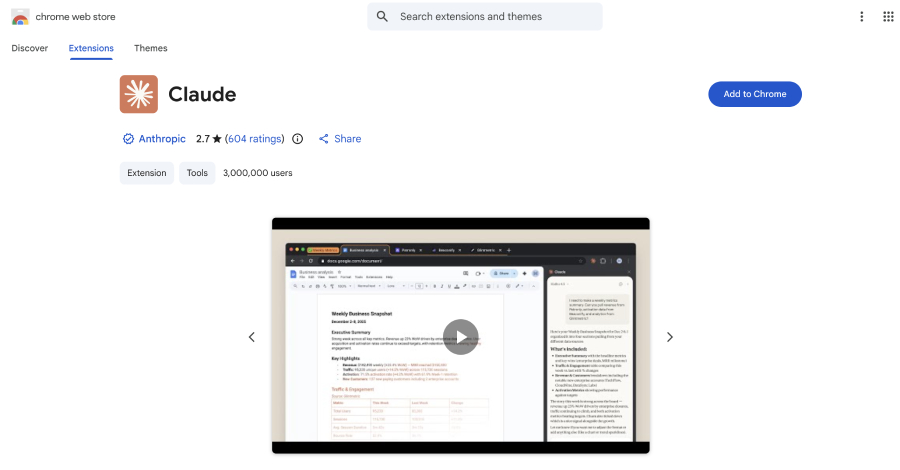
Cybersecurity researchers have disclosed a vulnerability in Anthropic's Claude Google Chrome Extension that could have been exploited to trigger malicious prompts simply by visiting a web page.

The flaw "allowed any website to silently inject prompts into that assistant as if the user wrote them," Koi Security researcher Oren Yomtov said in a report shared with The Hacker News. "No clicks, no permission prompts. Just visit a page, and an attacker completely controls your browser."

The issue, codenamed ShadowPrompt, chains two underlying flaws:

  • An overly permissive origin allowlist in the extension that allowed any subdomain matching the pattern (*.claude.ai) to send a prompt to Claude for execution.
  • A document object model (DOM)-based cross-site scripting (XSS) vulnerability in an Arkose Labs CAPTCHA component hosted on "a-cdn.claude[.]ai."

Specifically, the XSS vulnerability enables the execution of arbitrary JavaScript code in the context of "a-cdn.claude[.]ai." A threat actor could leverage this behavior to inject JavaScript that issues a prompt to the Claude extension.

The extension, for its part, allows the prompt to land in Claude's sidebar as if it's a legitimate user request simply because it comes from an allow-listed domain.

"The attacker's page embeds the vulnerable Arkose component in a hidden <iframe>, sends the XSS payload via postMessage, and the injected script fires the prompt to the extension," Yomtov explained. "The victim sees nothing."

Successful exploitation of this vulnerability could allow the adversary to steal sensitive data (e.g., access tokens), access conversation history with the AI agent, and even perform actions on behalf of the victim (e.g., sending emails impersonating them, asking for confidential data).

Following responsible disclosure on December 27, 2025, Anthropic deployed a patch to the Chrome extension (version 1.0.41) that enforces a strict origin check requiring an exact match to the domain "claude[.]ai." Arkose Labs has since fixed the XSS flaw at its end as of February 19, 2026.

"The more capable AI browser assistants become, the more valuable they are as attack targets," Koi said. "An extension that can navigate your browser, read your credentials, and send emails on your behalf is an autonomous agent. And the security of that agent is only as strong as the weakest origin in its trust boundary."

Top News: