ScyScan - Free Online Security & Network Tools

ScyScan provides a suite of free security tools — try our web scanner, virus scanner, link checker, SSL checker, WHOIS lookup, and IP lookup all in one place.

Explore All Tools

Cybersecurity Toolkit

Choose from our range of free online security and network tools to protect your devices, websites, and online presence

Web Scanner

Check websites for vulnerabilities and other security issues, providing real-time results and detailed analysis.

Scan Website / URL

Virus Scanner

Scan files for malware, viruses, trojans, and other threats using multi-engine technology.

Scan Files

Link Checker

Verify URLs for safety, detect phishing attempts, and check if links lead to malicious websites.

Check Links

SSL Checker

Analyze SSL certificates, check expiration dates, and verify proper encryption implementation.

Check SSL

Whois

Get detailed domain registration information including owner details, registration dates, and expiration.

Lookup Domain

IP Lookup

Identify geographic location, ISP information, and other details about any IP address.

Lookup IP

Why Choose ScyScan

ScyScan brings together essential security and network tools in a single, free platform designed for everyday use

🔒

All-in-One Platform

Web scanner, link checker, virus scanner, SSL checker, WHOIS, and IP lookup — all available from one place.

🔄

Trusted Reliability

Built on up-to-date threat intelligence and network databases you can count on.

🚀

Results in Seconds

Most checks complete within seconds so you get answers fast.

💰

Completely Free

All our security and network tools are free to use with no hidden costs or fair use restrictions.

🌐

Online Access

No software installation required - access our tools from any browser, anywhere.

📊

Clear Reports

Receive straightforward analysis and easy-to-understand reports for every tool.

Built for Everyday Security

ScyScan combines multiple security data sources and network databases into one accessible platform. No complex setup — just enter what you need and get clear results.

Multiple Data Sources

Aggregated threat intelligence from trusted security feeds for comprehensive coverage

Network Databases

Access to extensive WHOIS and IP geolocation databases for accurate information

Privacy Focused

We respect your privacy and automatically delete scans and lookups after analysis

Continuously Updated

Data sources are refreshed regularly so you get current information.

How People Use ScyScan Tools

📧 Check Attachments

Use our virus scanner to check files before opening them

🌐 Audit Your Website

Run a web scan to check your website for known vulnerabilities

🔗 Verify Links

Use the link checker to test if a URL is safe before clicking

🔐 Inspect SSL

Check SSL certificate validity and configuration for any domain

🏢 Research Domains

Look up domain registration details with the WHOIS tool

📍 Trace IPs

Find geographic and network details for any IP address

Start Using ScyScan Tools

All tools are free and ready to use — no account or sign-up required

Explore All Tools

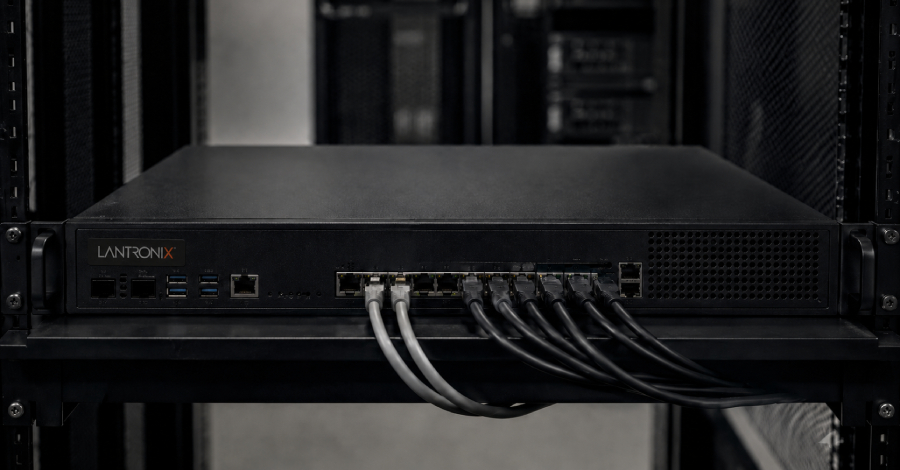
CISA Warns Critical Lantronix EDS5000 Flaw Is Being Actively Exploited

The U.S. Cybersecurity and Infrastructure Security Agency (CISA) on Tuesday warned of active exploitation of a critical security flaw impacting Lantronix EDS5000 Series devices, urging Federal Civilian Executive Branch (FCEB) agencies to apply the fixes by June 26, 2026.

The vulnerability in question is CVE-2025-67038 (CVSS score: 9.8), a code injection flaw that could result in the execution of arbitrary commands with elevated privileges.

"The HTTP RPC module executes a shell command to write logs when the user's authentication fails," according to the vulnerability's description on CVE.org. "The username is directly concatenated with the command without any sanitization. This allows attackers to inject arbitrary OS commands into the username parameter. Injected commands are executed with root privileges."

The security flaw was disclosed by Forescout Research Vedere Labs in April 2026 as part of a broader set of vulnerabilities collectively codenamed BRIDGE:BREAK that impacted serial-to-IP converters from Lantronix and Silex. There are currently no details on how the vulnerability is being exploited, or who is making the effort.

The disclosure comes as CISA also confirmed active exploitation of three maximum-severity security defects in Ubiquity UniFi OS, days after Defused Cyber said it detected in-the-wild abuse of the remote code execution chain comprising CVE-2026-34908, CVE-2026-34909, and CVE-2026-34910 to deploy commodity malware.

  • CVE-2026-34908 - An improper input validation vulnerability that could allow a malicious actor with access to the network to conduct command injection
  • CVE-2026-34909 - A path traversal vulnerability that could allow a malicious actor with access to the network to access files on the underlying system that could be manipulated to access an underlying account.
  • CVE-2026-34910 - An improper access control vulnerability that could allow a malicious actor with access to the network to make unauthorized changes to the system.

Earlier this month, Bishop Fox detailed a proof-of-concept (PoC) that chains together the three shortcomings to obtain a reverse shell with full root privileges in a single request. Patches for the flaws were released by Ubiquiti late last month.

"The vulnerabilities could allow remote attackers to make unauthorized system changes, access sensitive files, disclose information, or execute arbitrary commands on vulnerable systems, highly impacting the confidentiality, integrity, and availability of targeted devices," Belgium's Centre for Cybersecurity said.

"Given that UniFi OS devices are often centrally integrated into networks, successful compromise could enable lateral movement and broader network compromise."

热门新闻: