Anthropic recently rolled out Claude Mythos 5.2 to selected partners and Fable 5.2 to regular users, with improvements to coding and reasoning. But we also noticed some interesting cybersecurity changes.
Anthropic describes Mythos 5.2 as its "most capable model for cybersecurity engineering," which means it's now ahead of Fable 5.2 in security research.
However, that doesn't mean Fable 5.2 misses out on security restrictions, as it does come with cybersecurity safeguards, which block most potentially dangerous hacking activities.

According to Anthropic, Mythos 5.2 beats Fable 5.2 at finding vulnerabilities, reproducing them, and developing fixes. This makes sense, as Mythos is designed for organizations working on advanced cybersecurity tasks.
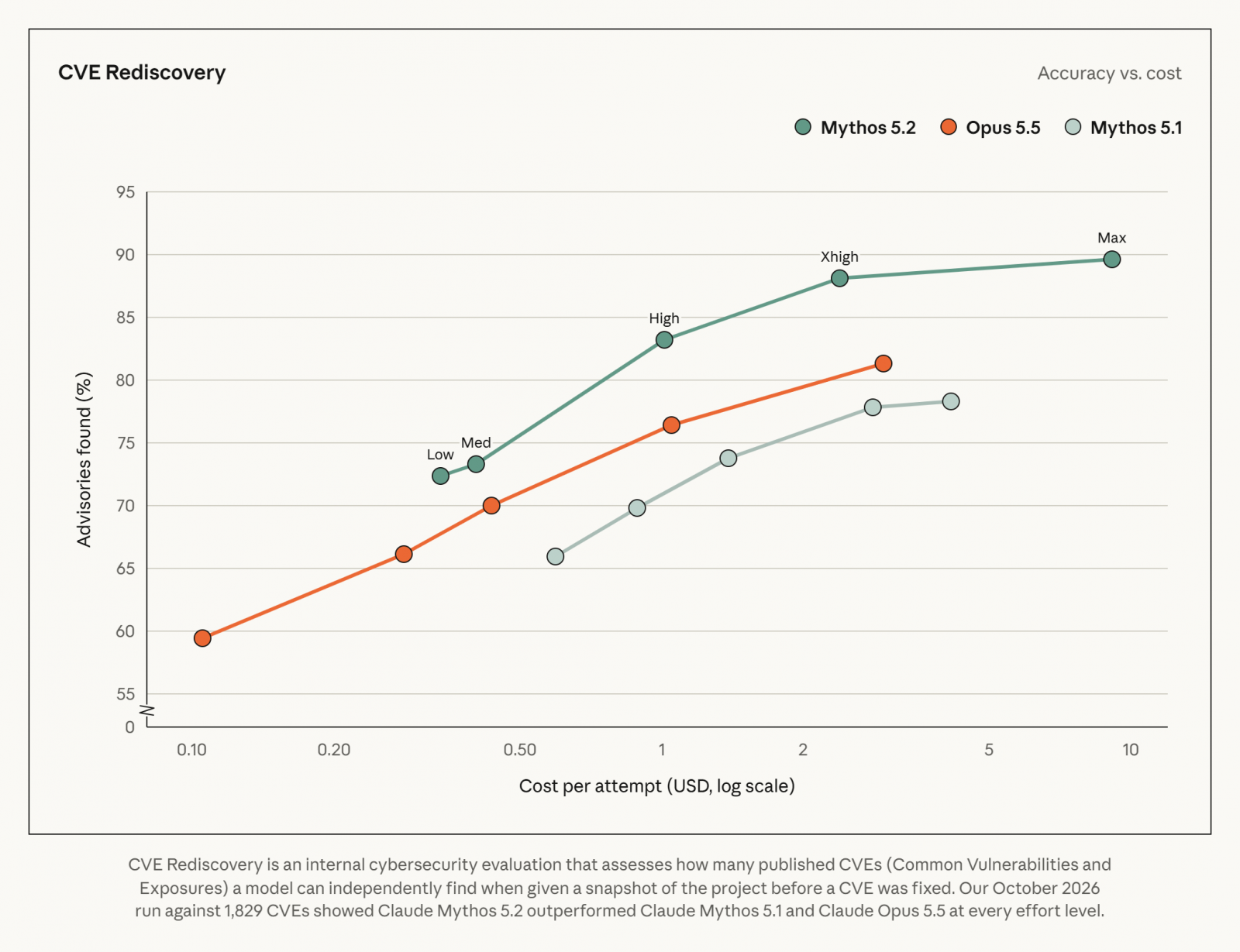
The company also shared some numbers. For example, Anthropic's CVE Rediscovery evaluation found that the Mythos 5.2 model can detect 10.2% more vulnerabilities than Claude Opus 5.5 and 14.4% more than Mythos 5.1.
Moreover, a security company told Anthropic that "one in six confirmed bugs" identified by Mythos 5.2 had been missed by every other frontier model it tested.
Claude Fable 5.2 blocks most high-risk cybersecurity tasks
Although Fable 5.2 and Mythos 5.2 are based on the same underlying parent model, there are obvious differences, and it's totally due to their intended use cases.
Unlike Mythos, Anthropic applied additional cybersecurity and biology safeguards to Fable so it can be made available to regular users.
These safeguards block high-risk activities, including "penetration testing, exploit generation" and certain vulnerability research tasks involving binary analysis.
If Anthropic detects high-risk activity, it will automatically switch to Opus 4.8 for cybersecurity-related responses. We've had those restrictions with Fable 5.1 as well, and at one point, it was starting to get annoying because Anthropic would block even normal requests.
I've personally experienced unnecessary blocks when using Fable 5.1. For example, when I asked Fable 5.1 to log in to my droplet on AWS, it switched me to Opus 4.8, stating that it detected high-risk activity, even though Fable was the model that originally configured the AWS account via API.
Thankfully, Fable is getting better at this. Anthropic says it has reduced unnecessary blocks by approximately 60% for cybersecurity requests compared with Fable 5.1.
Anthropic observed "about 60% fewer in cybersecurity" during early testing across Claude.ai, Claude Code, and Cowork.
Anthropic also tested Mythos 5.2 against sandbox escape attempts, where an AI agent tries to access files or credentials outside its permitted environment.
Anthropic also admits that its evaluations cannot catch every potential failure before release, particularly as models become increasingly capable of recognizing when they are being tested.
Adaptive Security's AI agents analyze email intent, context, and behavior to uncover phishing, business email compromise, and invoice fraud.
See what's getting through with a 14-day read-only scan of Microsoft 365 or Google Workspace, with no MX changes.